


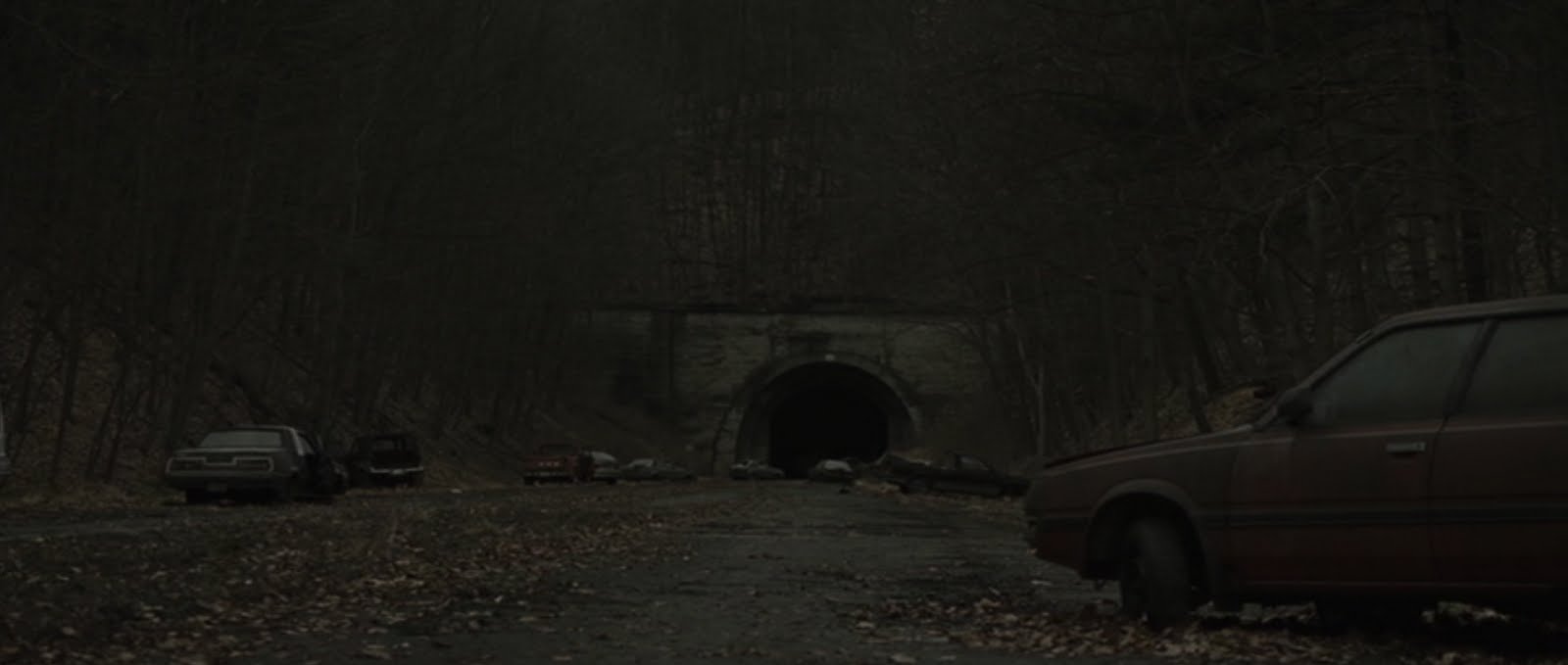


Ugh. I'm not sure I want to survive the apocalypse anymore.


Virginia Woolf once tried to distinguish between the man who loves learning and the man who loves reading and concluded that "there is no connection whatever between the two." "A learned man," she wrote, "is a sedentary, concentrated solitary enthusiast, who searches through books to discover some particular grain of truth upon which he has set his heart. If the passion for reading conquers him, his gains dwindle and vanish between his fingers. A reader, on the other hand, must check the desire for learning at the outset; if knowledge sticks to him well and good, but to go in pursuit of it, to read on a system, to become a specialist or an authority, is very apt to kill what it suits us to consider the more humane passion for pure and disinterested reading."
(From 'Hours in a Library' in The Essays of Virginia Woolf, Volume II, 1912–1918.)
And even paper and ink can sometimes survive a death sentence. One of the lost plays of Sophocles is The Loves of Achilles, copies of which must have perished one after another, century after century, destroyed in pillaging and fires or excluded from library catalogues because perhaps the librarian deemed the play of little interest or of poor literary quality. A few words were, however, miraculously preserved. "In the Dark Ages, in Macedonia," Tom Stoppard has one of his characters explain in his play The Invention of Love, "in the last guttering light from classical antiquity, a man copied out bits from old books for his young son, whose name was Septimus; so we have one sentence from The Loves of Achilles. Love, said Sophocles, feels like the ice held in the hand by children." I trust that book-burner's dreams are haunted by such modest proof of the book's survival.
Books lend a room a particular identity that can in some cases, usurp that of their owner—a peculiarity well known to oafish personalities who demand to be portrayed against the background of a book-lined wall, in the hope that it will grant them some scholarly lustre. Seneca mocked ostentatious readers who relied on such walls to lend them intellectual prestige; he argues for possessing only a small number of books, not "endless bookshelves for the ignorant to decorate their dining-rooms."

Jean-Michel's PIN code for his Citibank account was "So What?" after the Miles Davis tune.
Soon after the flight took off, Basquiat and his coterie were cozily ensconced in the first-class section. Basquiat took out a quarter-ounce of coke and dumped it on a cocktail plate. "I've never seen anything like it on a plane," says Gagosian, laughing. "It was like these four kind of rough-looking black kids hunched over a big pile of coke, and then they just switched over to these huge joints, and they sat up there and smoked them. It was just wild. They had their big hooded ski glasses on, and big overcoats. The stewardess freaked. I was terrified. I thought, 'Oh God, we're going to jail.'"
But Jean-Michel remained completely cool. "The stewardess came over and she said, 'You can't do that on a plane. The authorities are going to be waiting for you,'" recalls Gagosian with obvious relish. "Jean-Michel just looked up at her. He had perfect timing and he said, 'Oh, I thought this was first class.'"
Bird Lives! the Charlie Parker biography by Ross Russell, was one of his favorite books, bebop his favorite music. Like Parker, Basquiat left home at fifteen; like Parker, he was a terminal junkie and sex addict; like Parker, he quickly became conversant in the latest artistic vernacular, becoming a legend by the time he was twenty-one; like Parker, he was a clever and self-conscious bad boy. Basquiat must have found many passages in the book deeply resonant:I liked this exchange from right before Basquiat dies where he predicts the rise of Jazz-Rap:
"Iconoclast, breaker of rules, master of the put-on, Bird was the first jazz musician who carried the battle to the enemy...The act of throwing his saxophone out of a hotel window, walking into the sea wearing a new suit, standing up the promoter of a Paris jazz concert, drinking sixteen double whiskies in two hours, eating twenty hamburgers in a sitting...the patronizing way he took his pleasure with any white girl who offered herself—every episode in the cumulative legend of the Bird, however ineffectual and childish, was seen as a blow struck against the forces of oppression...
Charlie Parker was the first angry black man in music. Because he was ahead of his time, he bore the burdens of loneliness and frustration. The futility of blows he directed at the establishment did much to encourage his dependence upon heroin and alcohol, adding to his loneliness and accelerating an inner drive towards self destruction...In spite of his successes and growing prestige Charlie saw no future of the music he played, or for his race in America. To live once, and to the limit—that was his game plan," writes Russell.
[Vincent Gallo:] He said he was going to buy a clarinet and we were going to do new music together. Jazz-rap. I said, 'What's that?' and he got that sparkle in his eyes and said, 'You'll hear it the first time when we do it.'Lastly a quote from Jeffrey Wright who portrayed Basquiat in Julian Schnabel's biopic that makes me respect Wright even more and Schnabel even less:
"I think my performance was appropriated, literally, and the way I was edited was appropriated in the same way his story has been appropriated and that he was appropriated when he was alive.
"There's another parallel, that the mystery you are left with at the end of the film about who Basquiat was is the stuff that Julian [Schnabel] didn't know, so he assumed it didn't exist. The sense I got about him from his work and what I found out about his life was a profound sense of aloneness, not loneliness, because he had friends, but a real sense of isolation."
Ultimately says Wright, "Julian made him out to be too docile and too much a victim and too passive and not as dangerous as he really was. It's about containing Basquiat. It's about aggrandizing himself through Basquiat's memory. It's really fucking barbaric. But maybe our culture can't take the real danger of Basquiat right now."
